- Enquiry For Sales in IND : +91 7428094567
Enquiry For Sales in USA : +1 (716) 599-8595 - Request for quote

Blog
For every e-commerce site, cart abandonment is the biggest revenue leak. Cart abandonment happens when high-intent shoppers drop off due to reasons such as hidden costs, slow pages, trust gaps, or a complicated checkout. This is quietly costing brands’ sales every single day.
“Customers don’t stop buying, they stop when friction appears.” Finding the solution to card abandonment is necessary. The solution lies in identifying exactly where they drop off and removing those blockers with smarter tracking, CRO, and remarketing strategies.
This is where Reinvent Digital steps in. With a work experience of over 10 years, we have expertise in ecommerce performance marketing, analytics, and conversion optimisation. We help brands reduce cart abandonment by fixing gaps, improving checkout experiences, and winning back high-intent users through data-driven remarketing, not guesswork.
Read on to discover how you can turn abandoned carts & winning back customers, consistent revenue growth and how to reduce card abandonment rate.
Here are the expert suggested top 10 reasons why customers may be adding to cart but not buying.
Some consumers visit websites and find products which they like. They simply put them in their wishlist or favourites rather than buying immediately.
Consumers often compare prices by searching for the same product on different websites. They buy the product where they find a better deal.
Shipping fees, extra taxes and convenience charges often appear late, which often leads to cart abandonment.
Instead of opting for a seamless checkout process, many websites have multiple steps, such as account creation or excessive form fields, which can frustrate buyers.
Websites have limited payment options, sometimes only prepaid payment options, which leads to hesitation, ultimately cart abandonment.
Some users find it difficult to fill in the payment details, such as their card numbers and addresses. This happens when consumers find the website unsafe.
New or lesser-known brands often lose users due to uncertainty about quality or authenticity. This is a very common cause of cart abandonment.
Some websites have broken codes, slow checkouts, or payment failure which kills the mood of the buyer. This can kill the intent of conversion.
When a checkout page is overloaded with banners, pop-ups, navigation menus, cross-promotions, or long blocks of text. Every extra element competes with the primary goal: completing the purchase.
If users can’t instantly identify what action to take next, they pause—and hesitation is deadly in checkout flows. Weak CTA copy, poor placement, or low contrast can silently break conversions.
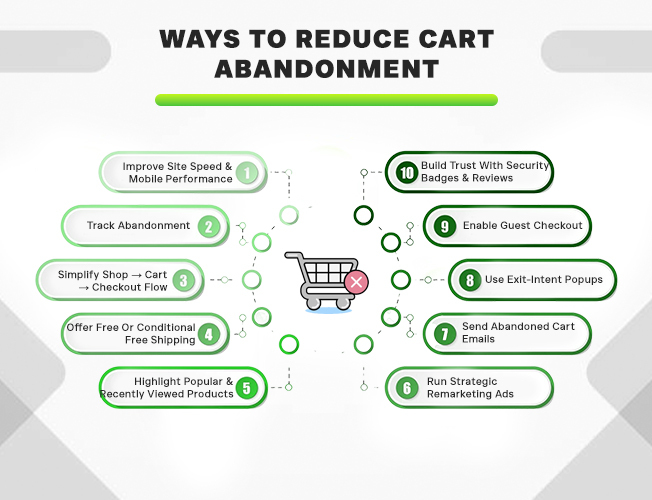
Below includes tactics which are clearly tied to reducing cart abandonment.
Often, slow-running pages increase frustrations as users do not wish to wait. So faster sites can keep the consumers engaged at every step, which can minimise the risk of abandonment.
For example A brand reduces mobile load time from 5 seconds to 2 seconds and sees a measurable increase in checkout completion without changing prices.
Cart abandonment doesn’t happen at one point. It happens across the funnel: product page → cart → checkout → payment. Without tracking each step, brands guess instead of fixing.
For example, Analytics shows 60% of users abandon the payment page. This shows a payment trust or method issue and not a product or pricing problem.
Instead of distracting consumers with multiple pages, keep the process very seamless. Shop to cart to checkout.
A simple buy now button takes the user directly to the checkout page, which makes the process seamless.
This often lures the consumer into buying the product. Free shipping reduces price friction and increases perceived value.
For example, “Free shipping on orders above ₹999” encourages users to complete checkout or even increase cart value.
By highlighting the products which consumers recently saw or the products which are popular. Shoppers seek validation before committing to any purchase. Social validation reassures users they’re making the right choice.
Lack of trust silently kills the buyers. If they do not feel safe, they will not purchase, so security badges on websites can lead to trust building amongst the consumers.
For example Displaying payment gateway logos, SSL badges, and verified reviews near checkout fields.
Not every consumer or buyer wants to make an account on your website; some want to buy a product without filling in lots of information. Guest checkout removes commitment anxiety and speeds up the checkout process.
Most users don’t abandon carts because they’ve changed their minds permanently. They leave due to distraction, uncertainty, or the desire to “think about it later.” Exit-intent popups intervene at this critical point and give shoppers a reason to stay or return.
By sending messages and emails to the buyers on abandoned carts, they will get a reminder of the products they liked, and this can help the shopper to come back to the cart and buy the product.
They allow brands to re-engage users who showed clear buying intent but left before completing the purchase, keeping your product top-of-mind across platforms like Google, Meta, and YouTube.
Cart abandonment isn’t a sign that customers don’t want to buy; it is usually a reminder that something is not right with your website. It can be unclear CTA, a broken link, or slow-loading pages. The brands that win are the ones that identify these gaps early and address them systematically.
This is where a performance-led partner like Reinvent Digital makes a measurable difference. Reinvent is the best digital marketing company for ecommerce. By aligning CRO, analytics, and remarketing, brands don’t just recover abandoned carts; they build smoother buying experiences that convert consistently and scale profitably.
Why do customers add to cart without buying?
Customers often add to cart for reasons like price comparison, saving items for later, checking shipping costs, or simply window shopping.
How can I encourage window shoppers to convert?
Using methods such as limited-time offers, cart reminders, and wishlists to nudge window shoppers toward completing their purchase.
Can unexpected shipping charges cause cart abandonment?
Yes. Hidden shipping fees and taxes revealed at checkout are among the top reasons customers leave without buying.
How can I reduce cart abandonment on my eCommerce site?
By being transparent about the costing, offering seamless checkout, offering multiple payment options you can reduce card abandonment.
Does website speed impact cart abandonment?
Yes, users tend to lose interest if the speed of the website is slow.